Start at the table, with curiosity
Food offers a gentle way into Kazakhstan because it gives a day a natural pause. A meal can introduce unfamiliar ingredients, a conversation about family habits or simply the pleasure of warm bread and tea after a walk. Approach it with curiosity rather than a checklist of dishes to conquer. You can discover a great deal by asking what your host enjoys eating.
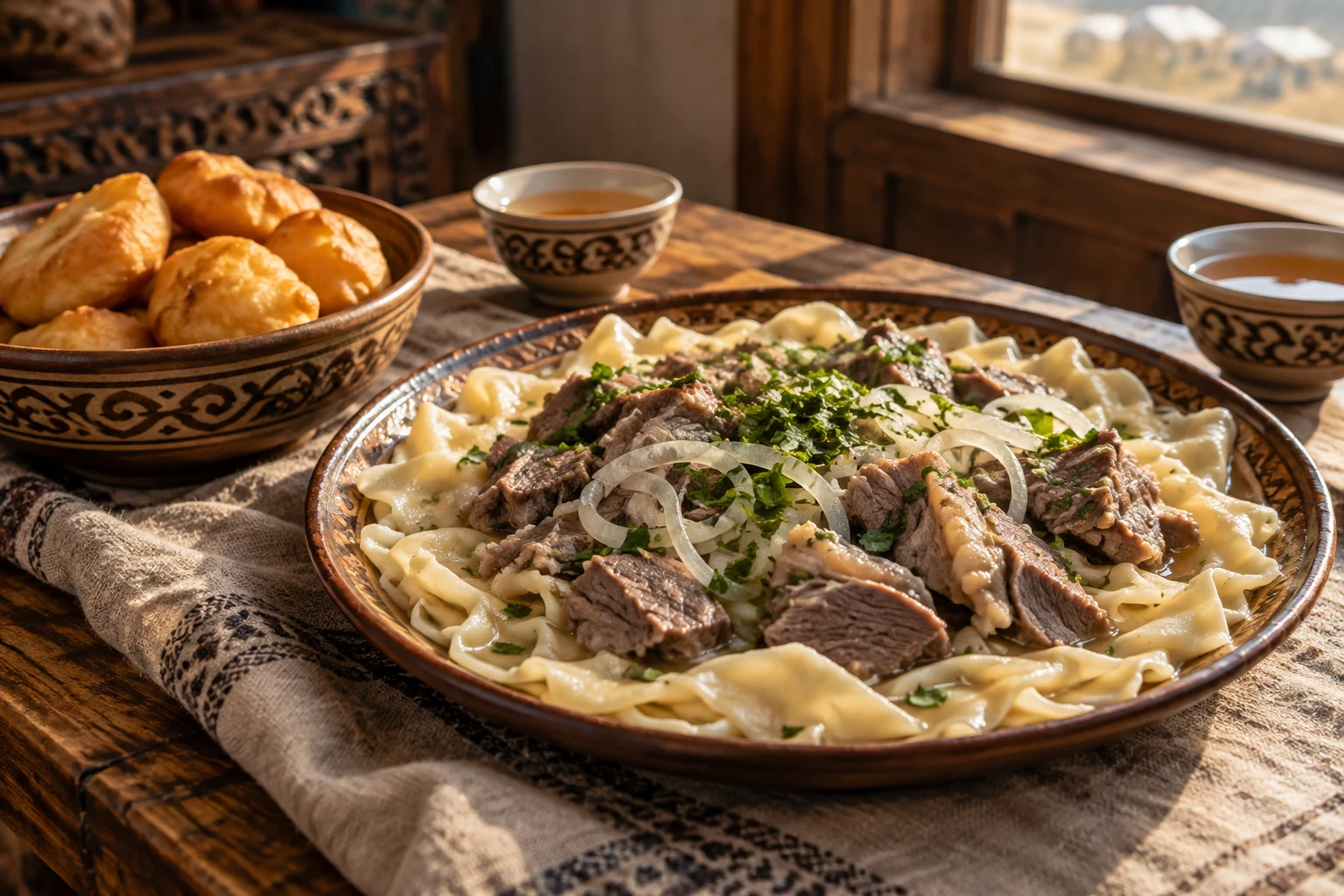
Beshbarmak combines meat and noodles; baursaks are fried pieces of dough often enjoyed with tea. Kazy is traditionally made with horse meat, something visitors may not expect from the name alone. Ask before ordering, especially if an ingredient matters to you. A guide can explain the menu without turning the meal into a test of how adventurous you are willing to be.
Let a food day unfold in stages
A market, a neighbourhood café and a shared meal reveal different sides of everyday life. At a market, look at what catches your eye and ask which items are ready to eat and which are ingredients for home cooking. Give yourself time to understand the answer. Respect the seller's space, request permission for photographs and make purchases because you want them.
You might plan a morning walk followed by a small tasting, then keep lunch flexible and save your appetite for dinner. Another traveller might prefer one generous lunch and a quiet evening. Tell your guide which suits you. Several rich meals close together can make a food itinerary tiring; spacing them out gives individual flavours and conversations a chance to stay in your memory.
Explain dietary needs before you sit down
If you have an allergy, a vegetarian diet or another restriction, communicate it while the experience is being arranged. Ask about stock, sauces, fillings and cooking methods as well as the visible ingredients. A dish that appears suitable may be prepared differently from what you expect. Clear questions are helpful to a kitchen or host, particularly when a meal is being made for a group.
Keep a short written explanation you can show when language becomes difficult. Separate an ingredient you prefer to avoid from one that must be excluded, and ask whether preparation can meet your needs. If there is uncertainty, choose an alternative you understand. For an outdoor day, agree on snacks and the meal stop beforehand, so dietary planning does not depend on whatever happens to be available.
Enjoy the company as much as the dish
At a shared table, watch how your host introduces the food and follow their lead when you are unsure. You can ask how a dish is served, whether it is a family favourite or when they usually prepare it. Families and settings differ, so leave space for their own explanation. The person beside you has more to offer than a rehearsed account of national customs.
There is no need to eat something you cannot comfortably accept. A warm thank-you and a simple explanation can sit alongside genuine appreciation of the invitation. Let your organiser know about restrictions beforehand so the conversation at the table can remain relaxed. Put the camera aside for part of the meal: noticing the pace of an exchange can be more rewarding than documenting every plate.
Make flavour part of the route
When choosing a food experience, ask what it includes: a guided market visit, tastings, a full meal or time with a host. Check who will explain the ingredients, how the walk fits your mobility and whether the group can accommodate your needs. A food stop should fit the day around it. After a demanding outing, a seated meal may be more welcome than another long walk.
Give SHANYRAQ a little context about how you like to eat. You might enjoy learning about home cooking, prefer a relaxed introduction to familiar and unfamiliar dishes, or want more time exploring a market. Mention your appetite for walking as well as food. The best culinary memory may be a single dish understood well, shared with good company and given enough time.