Look for the skill inside the object
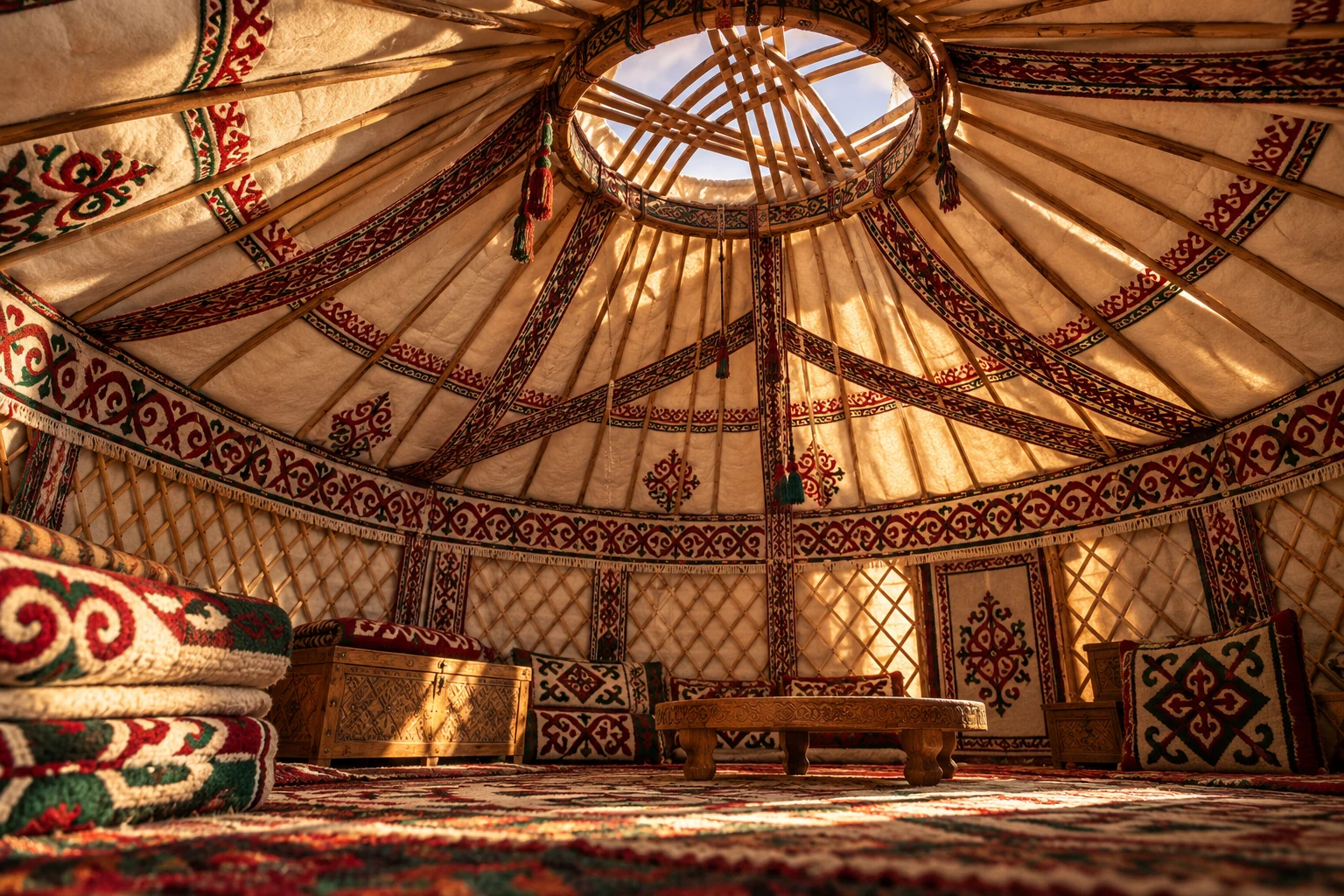
A yurt offers a way to look at heritage through making: a circular wooden frame, felt covering and the skills needed to bring them together. UNESCO recognises the traditional knowledge involved in yurt craftsmanship. That recognition is a starting point for curiosity. Look beyond the finished shape and ask who made the parts, what work they require and how the maker learned.
If a visit includes a yurt or a craft demonstration, clarify what you will actually see. A space used for hosting, a display and a workshop can offer different experiences. Ask whether the maker will be present and whether questions or hands-on participation are part of the arrangement. Understanding the setting helps you appreciate it on its own terms rather than expecting a single version of tradition.
Hear music through the person playing it
Dombra music is another doorway into Kazakh culture. If you would like to hear it during your trip, ask about performances or encounters available for your dates. A live experience may allow you to notice the player's choices and the relationship between music and setting. Give it your full attention for a while before reaching for the phone to record.
Where conversation is welcome, ask what the musician enjoys playing or what they would like a newcomer to listen for. Let them explain in their own words, with interpretation if needed. Do not assume every piece carries the same story or every performance follows the same format. If recording is permitted, confirm any limits on sharing it, and respect the performer as a working artist.
Visit a celebration in its real context
Celebrations such as Nauryz offer another way to encounter culture, but a festival should be planned around actual dates and confirmed local events. Ask what is happening, where visitors are welcome and how the day will work. Do not expect an event to be available throughout the year simply because it appears in a travel description. The setting and participants matter as much as the name.
If a celebration is part of your route, allow for its pace and the practical needs of your group. Agree on meeting points, meals, breaks and language support where appropriate. Observe how people participate, and follow guidance about access and photographs. You may find a small moment of shared attention as interesting as a larger performance, especially when someone can explain what it means to them.
Respect a tradition that belongs to living people
Heritage is carried by people with contemporary lives, preferences and different ways of practising it. A family story, a craft skill and a public presentation may each show one part of a wider picture. Avoid expecting every person you meet to dress, speak or live according to an image of the past. Ask what the tradition means in their own experience today.
Before touching an object, entering a private space or photographing someone at work, seek permission. If you want to buy a craft item, ask about the maker and materials, then consider how it will travel home. Purchase thoughtfully and within your budget. Your interest can support a respectful exchange when it makes room for the maker's knowledge, time and own account of the work.
Choose depth over a crowded cultural programme
When comparing experiences, ask how much time you will spend with the host or maker and what language support is included. A programme packed with demonstrations may offer less room for conversation than a focused visit. Think about your own interests: listening, watching a process, understanding an object or trying a skill. Share that preference so the proposed encounter has a clear purpose.
Tell SHANYRAQ which aspect of living heritage you would like to understand, and check availability for your travel dates. Leave time afterwards to discuss what you noticed with your guide or companions. Culture can stay with you as the memory of a person's voice explaining a piece of work, or a melody heard with attention. Those connections give the visible objects their human context.